Why Sauna May Work Better Together: What the 2026 Research Says About Ritual and Connection
Most sauna research asks what heat does to the body. A 2026 study asked a different question: what do the people and the ritual do?
The study
Newson and colleagues published three studies in Social Science & Medicine in 2026, with a combined 1,907 sauna users in the UK. They used a framework called the Social Cure model alongside a ritual lens to understand how feelings of connection grow through sauna, and how social identities shape wellbeing outcomes. The authors conclude that the social and ritual aspects of sauna use may contribute to its wellbeing effects, with implications for sauna operators.
A Finnish perspective
A separate 2026 descriptive study of Finnish sauna bathers found four themes: mental recovery, social togetherness, purification and physical health. Mental recovery was the most prominent motivation among women, and social togetherness ranked highest among men. Participants also described screen-free time as important for mental recovery.
What it can't tell us
These are self-reported, largely correlational findings, so they show association, not that company causes better outcomes. I'm also working from the published abstract, and a corrigendum has been issued for the paper, so numbers beyond the abstract-level conclusions should be checked against the final version.
Why it fits the tradition
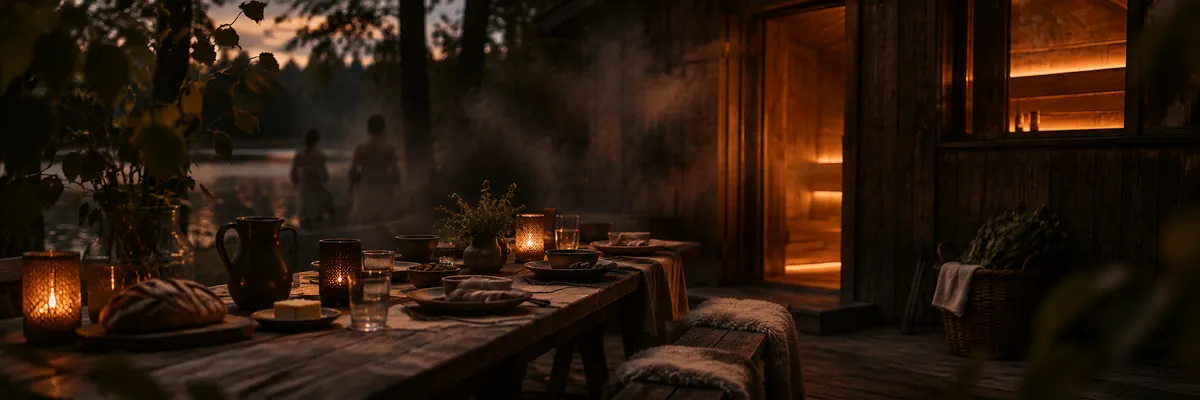
My brother Anders rebuilt his life after cancer around three principles: a sauna always warm, a table big enough for everyone, and food with a story. The sauna has always been a place people gather. The research is starting to catch up with something the Nordic tradition assumed: the heat is the practice, and the people are part of the point.
Read Anders' story and the sauna's social side in Chapters 7 and 8 of Sauna Like a Viking. Get the ebook, the audiobook or the bundle: Viking Forge Protocol.
Prefer a physical copy? Print edition on Amazon.
